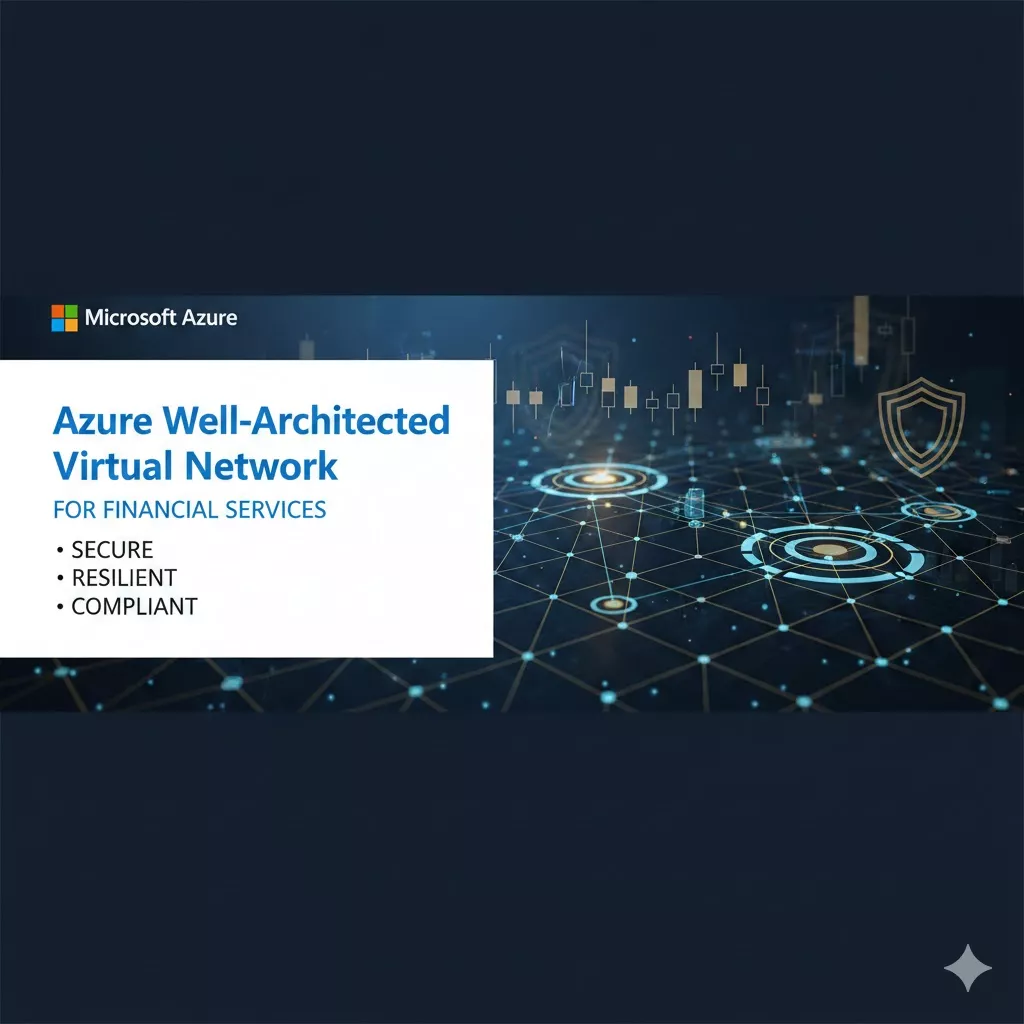
From Audit Pressure to Architectural Mastery: How a Leading US Bank Forged an Unbreakable Azure VNet in 2026
It was late January 2026 in Charlotte, North Carolina. Apex National Bank‘s CISO, Sreekanth , sat through another intense OCC supervisory meeting. Examiners drilled into third-party cloud risks, FFIEC cloud computing expectations, and the need for demonstrable resilience against region-wide failures—especially with emerging GenAI fraud models processing sensitive transaction data. The bank’s hybrid setup was creaking; legacy networks lacked proper segmentation, egress controls were manual, and scaling for peak trading volumes felt like a gamble.
Sreekanth turned to Cloudsoft Solutions—a premier Azure Advanced Specialization Partner—to architect a zone-redundant, hub-spoke Azure Virtual Network that would satisfy regulators while enabling elastic growth and AI innovation. The result? A fortress-like design that passed audits with flying colors and handled 20× load spikes seamlessly.
Here’s the detailed 14-step journey we executed, rooted in Azure’s Well-Architected Framework and financial services best practices.
Step 1: Regulatory & Framework Alignment
- Mapped to FFIEC Joint Statement on Cloud, OCC Bulletin 2013-29 (third-party oversight), FDIC resilience guidance, NIST SP 800-53, GLBA Safeguards.
- Used Azure Well-Architected Review tool with Financial Services Lens—focused on Reliability (zone/region redundancy), Security (defense-in-depth), and Operational Excellence.
Step 2: Region Selection & IP Planning
- Primary: East US (low-latency for East Coast ops) + West US 2 (DR, paired region for prioritized recovery).
- Enabled Azure IP Address Management tools + careful CIDR planning (e.g., 10.64.0.0/16 primary) to avoid overlaps and reserve space.
Step 3: Hub-Spoke VNet Topology (Core Pattern for Banks)
- Hub VNet (shared services): Centralized Azure Firewall, Azure Route Server, VPN/ExpressRoute gateways.
- Spoke VNets (workloads): Segregated for app, data, AI—connected via VNet peering (global peering for multi-region).
Step 4: Multi-Zone Subnet Design (Minimum 3 Zones)
- Deployed zone-redundant VNets in regions supporting Availability Zones.
- Public Subnets (frontend): For Azure Front Door origins, limited public IPs.
- Private App Subnets: For AKS, App Services, VMs—zone-redundant.
- Protected Data Subnets: For Azure SQL, Cosmos DB—strict isolation.
- Inspection Subnets: For Azure Firewall Premium (centralized).
Step 5: Routing & Connectivity Controls
- User-Defined Routes (UDRs) force traffic through Azure Firewall for inspection.
- Azure Firewall in hub: East-west/north-south filtering, TLS inspection, IDPS.
- No direct internet from spokes—egress via NAT Gateway or Firewall.
Step 6: Private Connectivity & Hybrid
- Azure ExpressRoute (redundant circuits) + VPN Gateway (zone-redundant) for on-premises.
- Azure Virtual WAN optional for large-scale branch connectivity.
Step 7: Defense-in-Depth Network Security
- Network Security Groups (NSGs): Stateful, tag-based rules.
- Azure DDoS Protection Standard + Azure Firewall.
- Private Link / Private Endpoints for all PaaS (SQL, Storage, Key Vault, OpenAI)—traffic stays private.
Step 8: Encryption & Data Protection
- TLS 1.3 enforced via Front Door / Application Gateway.
- Azure Key Vault with customer-managed keys (CMK), HSM-backed.
- Confidential Computing for sensitive AI workloads.
Step 9: Edge & Threat Protection
- Azure Front Door + Azure CDN → Global entry, WAF policies (OWASP + custom banking rules).
- Microsoft Defender for Cloud + Sentinel for threat hunting.
Step 10: Zero-Trust Identity
- Microsoft Entra ID (formerly Azure AD) with Conditional Access, MFA, device compliance.
- Just-In-Time (JIT) access via Privileged Identity Management.
- ABAC policies with tags (compliance:ffiec).
Step 11: Observability & Compliance Automation
- Azure Monitor, Network Watcher, Flow Logs → Log Analytics + Sentinel.
- Microsoft Purview for data classification.
- Azure Policy + Defender for Cloud regulatory compliance dashboards (FFIEC, PCI, etc.).
Step 12: High Availability & Multi-Region DR
- Zone-redundant services (Azure SQL Zone-Redundant, AKS zonal).
- Multi-region active-passive: Azure Site Recovery, Traffic Manager / Front Door failover, geo-redundant storage (GZRS).
- RTO < 15 min, RPO near-zero for critical apps.
Step 13: AI & GenAI Controls (2026 Focus)
- Isolated subnets for Azure OpenAI / ML workloads.
- Private Endpoints + prompt logging/guardrails.
- Monitored via Defender for Cloud AI protections.
Step 14: IaC & Continuous Governance
- Bicep / Terraform + Azure DevOps pipelines.
- Azure Landing Zones for governance.
- Automated Well-Architected assessments.
The Impact at Apex National Bank
- Seamless OCC/FFIEC exams with automated evidence.
- Scaled effortlessly during market events—zero downtime.
- 50%+ reduction in egress costs via Private Link.
- Safe GenAI rollout for fraud detection and personalization.
Sreekanth reflects: “Azure didn’t just host our workloads—it became the resilient backbone regulators trust.”
Ready to build your bank’s unbreakable Azure foundation in 2026? Cloudsoft Solutions—experts in Azure for financial services—offers landing zone setups, compliance workshops, and secure migrations.
Visit www.cloudsoftsol.com to get started. Let’s architect resilience together.
What’s your biggest Azure networking or compliance challenge right now? Comment below!