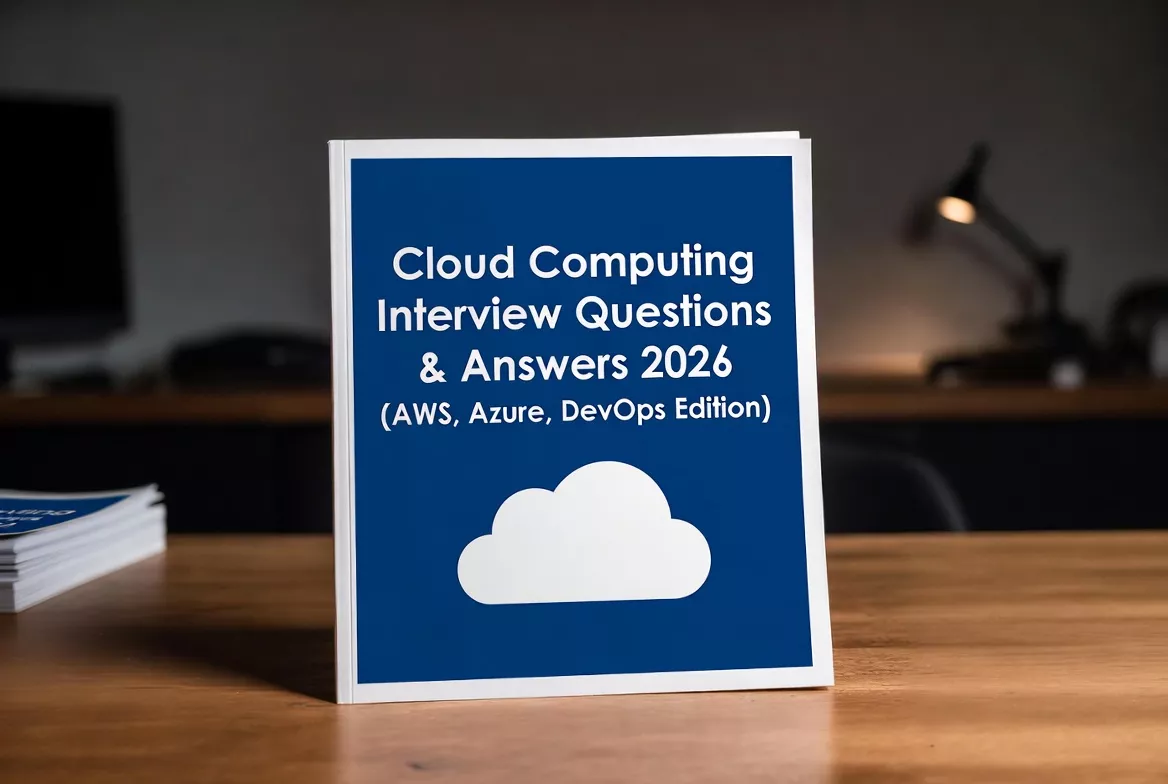
Cloud Computing Interview Questions & Answers 2026 (AWS, Azure, DevOps Edition)
By Tech Insights Team, CloudSoftSol.com January 19, 2026 – Hyderabad, India
As the cloud computing landscape evolves rapidly in 2026, professionals gearing up for interviews in AWS, Azure, and DevOps roles need to stay ahead of the curve. With advancements like AI-integrated cloud services, serverless architectures, and enhanced DevOps automation, mastering these topics is crucial for landing top jobs at tech giants like Amazon, Microsoft, and Google. This comprehensive guide expands on essential cloud computing interview questions and answers, tailored for 2026 trends. Whether you’re a fresher or an experienced engineer, these insights will help you ace your next interview.
We’ve categorized the questions into General Cloud Computing, AWS-Specific, Azure-Specific, and DevOps-Focused sections to provide a structured preparation path. Our expanded categories include emerging topics like edge computing, zero-trust security, and sustainable cloud practices – key areas recruiters are emphasizing this year.
What is Cloud Computing? A Quick Refresher for 2026 Interviews
Before diving into the questions, let’s recap: Cloud computing delivers on-demand computing resources over the internet, including storage, servers, databases, networking, software, and analytics. In 2026, it’s dominated by hybrid-multi-cloud strategies, with AWS holding 32% market share, Azure at 21%, and Google Cloud at 12%. DevOps integration ensures seamless CI/CD pipelines, making agility a non-negotiable skill.
Now, let’s explore the top cloud computing interview questions and answers for 2026.
General Cloud Computing Interview Questions & Answers
These foundational questions test your broad understanding of cloud principles, often asked in entry-level to mid-senior roles.
- What are the main service models in cloud computing? Answer: The three primary models are Infrastructure as a Service (IaaS), Platform as a Service (PaaS), and Software as a Service (SaaS). In 2026, we’re seeing a rise in Function as a Service (FaaS) for serverless computing, like AWS Lambda or Azure Functions, which allows developers to run code without managing servers.
- Explain the difference between public, private, and hybrid clouds. Answer: Public clouds (e.g., AWS, Azure) are shared infrastructures managed by third-party providers. Private clouds are dedicated to a single organization for enhanced security. Hybrid clouds combine both, offering flexibility – a trend in 2026 for enterprises balancing cost and compliance, using tools like Azure Arc for management.
- What is edge computing, and how does it relate to cloud computing in 2026? Answer: Edge computing processes data closer to the source (e.g., IoT devices) to reduce latency. It complements cloud by offloading tasks; in 2026, AWS Outposts and Azure Edge Zones integrate edge with central cloud for real-time applications like autonomous vehicles.
- How does zero-trust security work in cloud environments? Answer: Zero-trust assumes no entity is trusted by default, verifying every access request. In cloud, it uses micro-segmentation, MFA, and AI-driven threat detection – essential in 2026 with rising cyber threats, implemented via AWS IAM Zero-Trust or Azure Defender.
- What are the benefits of multi-cloud strategies? Answer: Multi-cloud avoids vendor lock-in, enhances resilience, and optimizes costs. In 2026, tools like Terraform for IaC enable seamless management across AWS and Azure, but challenges include data silos and complexity.
AWS Interview Questions & Answers 2026 Edition
AWS remains the leader, with updates like Amazon Bedrock for generative AI. These questions focus on core services and new features.
- What is Amazon EC2, and how has it evolved in 2026? Answer: EC2 provides scalable virtual servers. In 2026, Graviton3 processors offer better energy efficiency, supporting sustainable computing. Use cases include auto-scaling groups for dynamic workloads.
- Explain AWS Lambda and its role in serverless architecture. Answer: Lambda executes code in response to triggers without provisioning servers. In 2026, it integrates with Amazon Q for AI-assisted coding, ideal for event-driven apps like real-time data processing.
- How does AWS S3 ensure data durability and security? Answer: S3 offers 99.999999999% durability with replication across Availability Zones. Security features include SSE encryption and IAM policies; in 2026, enhanced with Macie for AI-based data classification.
- What is VPC Peering in AWS? Answer: VPC Peering connects two VPCs privately, enabling resource sharing without internet exposure. In 2026, it’s crucial for hybrid setups with on-prem via AWS Direct Connect.
- Describe AWS CDK and its advantages for DevOps. Answer: AWS Cloud Development Kit (CDK) allows infrastructure as code in familiar languages like Python. In 2026, it streamlines CI/CD with GitHub Actions integration, reducing deployment times.
Azure Interview Questions & Answers 2026 Edition
Microsoft Azure emphasizes AI and integration with Microsoft 365. Expect questions on Azure’s unique features like Synapse Analytics.
- What is Azure Virtual Machines, and what’s new in 2026? Answer: Azure VMs provide on-demand scalable computing. In 2026, Ampere Altra processors boost performance for AI workloads, with auto-scaling via Azure Monitor.
- Explain Azure Functions and its serverless capabilities. Answer: Azure Functions run event-triggered code without server management. Enhanced in 2026 with GitHub Copilot integration for faster development, supporting languages like .NET and Python.
- How does Azure Blob Storage handle data management? Answer: Blob Storage is for unstructured data with hot/cool/archive tiers for cost optimization. In 2026, Azure Purview adds governance for compliance in regulated industries.
- What is Azure Active Directory (Entra ID) for identity management? Answer: Entra ID manages user identities and access. In 2026, it features passwordless authentication and AI anomaly detection to combat phishing.
- Describe Azure DevOps and its CI/CD pipeline features. Answer: Azure DevOps offers repos, pipelines, and boards for end-to-end development. In 2026, AI-powered test automation reduces bugs, integrating seamlessly with GitHub.
DevOps Interview Questions & Answers in Cloud Context (2026 Focus)
DevOps bridges development and operations, amplified by cloud tools. These questions highlight automation and collaboration.
- What is Infrastructure as Code (IaC), and why is it vital in 2026? Answer: IaC manages infrastructure through code (e.g., Terraform, Ansible). In cloud, it ensures consistency; in 2026, GitOps practices with ArgoCD automate deployments across AWS and Azure.
- Explain CI/CD pipelines and tools used in cloud DevOps. Answer: CI/CD automates building, testing, and deploying code. Tools like Jenkins, GitLab CI, or AWS CodePipeline; in 2026, emphasis on AI-driven pipelines for predictive failure detection.
- What is containerization, and how do Kubernetes and Docker fit in? Answer: Containerization packages apps with dependencies (Docker). Kubernetes orchestrates them; in 2026, Amazon EKS and Azure AKS add auto-scaling for microservices.
- How does monitoring differ in cloud DevOps? Answer: Use tools like Prometheus, Grafana, or cloud-native (AWS CloudWatch, Azure Monitor). In 2026, AIOps integrates ML for proactive issue resolution.
- What are blue-green deployments in DevOps? Answer: Blue-green switches traffic between identical environments for zero-downtime updates. In cloud, AWS Elastic Beanstalk and Azure App Service simplify this.
Expanded Categories: Emerging 2026 Trends in Cloud Interviews
To expand your preparation, we’ve added questions on niche areas:
- How is AI/ML integrated into cloud services in 2026? Answer: AWS SageMaker and Azure ML Studio enable no-code ML models. Trends include federated learning for privacy-preserving AI.
- What role does sustainability play in cloud computing? Answer: Providers like AWS aim for net-zero by 2040. Tools like Azure Sustainability Calculator track carbon footprints.
- Explain quantum computing in the cloud. Answer: Services like AWS Braket and Azure Quantum offer hybrid quantum-classical computing for complex simulations.
- How to handle data sovereignty in multi-cloud? Answer: Use region-specific storage and compliance tools like AWS Macie to adhere to laws like GDPR.
- What is GitOps, and its benefits in DevOps? Answer: GitOps uses Git as the single source of truth for declarative infrastructure. In 2026, it enhances auditability in cloud environments.
Tips to Ace Your Cloud Computing Interview in 2026
- Practice hands-on with free tiers on AWS and Azure.
- Stay updated via certifications like AWS Certified Solutions Architect or Azure DevOps Engineer.
- Highlight real-world projects involving DevOps tools.
- Prepare for behavioral questions on agile methodologies.
This guide to cloud computing interview questions and answers 2026 edition equips you with the knowledge to excel. For more resources, explore CloudSoftSol.com’s tutorials on AWS, Azure, and DevOps.