Top 50+ AWS API Gateway Interview Questions Latest Updated
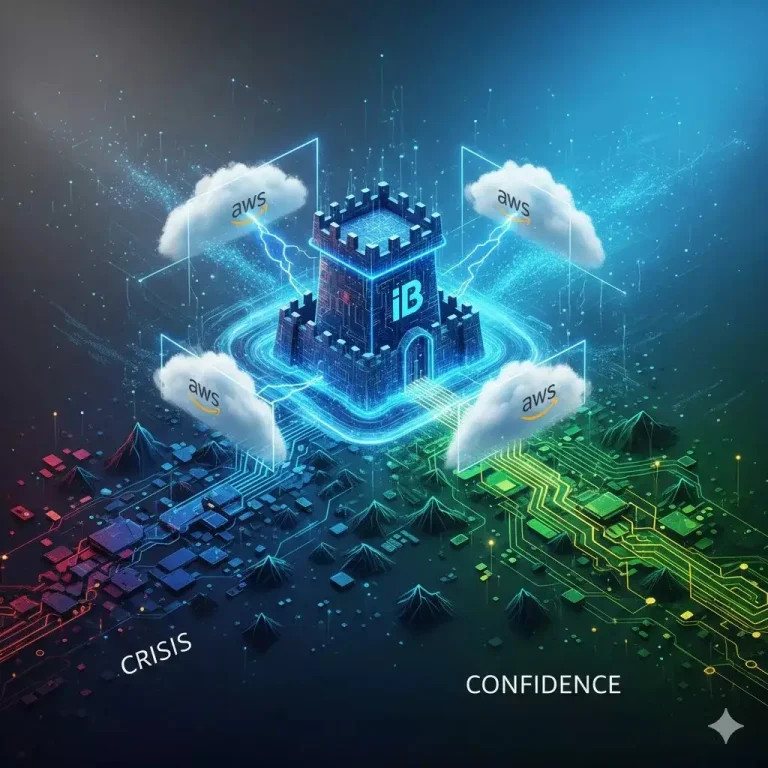
In the dynamic ecosystem of serverless architectures, AWS API Gateway continues to evolve as the premier managed service for creating, publishing, maintaining, monitoring, and securing APIs at scale. As of December 2025, key enhancements include Developer Portals for automated API documentation and onboarding (reducing setup from weeks to minutes), MCP proxy support for integrating REST APIs with AI agents via Amazon Bedrock AgentCore, private integrations with Application Load Balancer (ALB) for reduced latency, response streaming for REST APIs to handle large payloads progressively, and expanded TLS security policies (e.g., TLS 1.3-only, FIPS, Post-Quantum Cryptography). These updates, alongside VPC Link V2 for REST APIs and CloudWatch RUM analytics for portals, make API Gateway indispensable for AI-driven, low-latency, and compliant API ecosystems.
This comprehensive guide features over 50 AWS API Gateway interview questions with detailed answers, incorporating real-world use cases from sectors like fintech, healthcare, and e-commerce. Ideal for roles such as Cloud Architect, Backend Developer, or DevOps Engineer, these insights draw from 2025 best practices. At CloudSoftSol, we specialize in API Gateway consulting to optimize your serverless integrations and security. Let’s API-fy your interview success!
What is AWS API Gateway?
AWS API Gateway is a fully managed service that enables developers to create, deploy, and manage RESTful and WebSocket APIs. It acts as a front door for applications, handling traffic management, authorization, monitoring, and throttling. In 2025, it supports HTTP/2, gRPC, and advanced features like semantic search for tool discovery in MCP proxies, making it perfect for hybrid AI/ML and microservices architectures. Pricing is request-based (e.g., $3.50 per million REST requests), with free tier options.
Top 50+ AWS API Gateway Interview Questions and Answers
These questions progress from foundational to advanced, with 2025-specific references and practical scenarios.
1. What is AWS API Gateway, and what are its primary benefits?
Answer: AWS API Gateway is a managed service for building, deploying, and managing scalable APIs (REST, HTTP, WebSocket). Benefits include automatic scaling, built-in security (e.g., Cognito, IAM), caching, throttling, and monitoring via CloudWatch. Real-World Use Case: In a fintech app, expose backend Lambdas as REST APIs with rate limiting to prevent DDoS during trading peaks.
2. What are the different API types supported by API Gateway?
Answer: – REST APIs: Full-featured for complex routing and transformations. – HTTP APIs: Lightweight, cost-effective for simple proxying. – WebSocket APIs: For real-time, bidirectional communication. (gRPC support via HTTP/2 in REST/HTTP APIs.) Real-World Use Case: Use HTTP APIs for a cost-optimized mobile backend; WebSocket for live chat in a customer support app.
3. Explain the difference between REST and HTTP APIs in API Gateway.
Answer: REST APIs offer advanced features like usage plans, API keys, and custom authorizers but are pricier. HTTP APIs are simpler, faster (up to 70% cheaper), and support Lambda/JWT auth natively, with 2025 additions like response streaming. Real-World Use Case: Choose HTTP for a serverless e-commerce checkout API to minimize latency and costs.
4. What are integration types in API Gateway?
Answer: – Lambda Proxy: Passes entire request to Lambda. – HTTP Proxy: Forwards to HTTP endpoints. – Mock: Returns static responses. – AWS Service: Direct to services like DynamoDB. (2025: ALB private integration for VPCs.) Real-World Use Case: Lambda proxy for a healthcare data query API integrating with DynamoDB.
5. How does API Gateway handle authentication and authorization?
Answer: Supports IAM, Cognito User Pools, Lambda authorizers, and JWT for HTTP APIs. Custom authorizers via Lambda for complex logic. Real-World Use Case: Use Cognito for user sign-in in a social media API, enforcing JWT validation on protected routes.
6. What is request/response mapping in API Gateway?
Answer: Templates (Velocity Template Language) to transform requests/responses between clients and backends, e.g., adding headers or filtering data. Real-World Use Case: Map incoming JSON to XML for legacy system integration in a banking API.
7. Explain API Gateway caching and how to configure it.
Answer: Caches responses at edge locations based on TTL (up to 24 hours) and keys (e.g., query params). Enable per stage; reduces backend load. Real-World Use Case: Cache product catalog responses in an e-commerce API to handle flash sales efficiently.
8. What are usage plans and API keys in API Gateway?
Answer: Usage plans throttle/rate-limit per API key; API keys track external developer usage. (REST APIs only.) Real-World Use Case: Assign API keys to partner devs in a SaaS platform, enforcing 1000 calls/day limits.
9. How do you deploy an API in API Gateway?
Answer: Create stages (dev/prod), deploy via console/CLI (e.g., aws apigateway create-deployment), with canary releases for testing. Real-World Use Case: Blue-green deploy a payment API version to prod stage with 10% traffic shift.
10. What is the Developer Portal in API Gateway (2025)?
Answer: Fully managed portals for API discovery, auto-generated docs (OpenAPI), and analytics via CloudWatch RUM; reduces onboarding to minutes. Available in most regions. Real-World Use Case: Expose internal APIs to third-party devs with self-service signup and usage dashboards.
11. Describe API Gateway stages and their role.
Answer: Stages represent deployment environments (e.g., beta/prod) with configs for throttling, caching, and canary weights. Real-World Use Case: Mirror prod stage for staging in a CI/CD pipeline for safe testing.
12. How does API Gateway integrate with Lambda?
Answer: Direct invocation via proxy or non-proxy; supports async/sync modes. 2025: Streaming responses for long-running functions. Real-World Use Case: Proxy serverless image processing API to Lambda for on-demand resizing.
13. What is throttling in API Gateway?
Answer: Per-method (1000 req/sec default) and account-level limits; burst handling via token bucket. Real-World Use Case: Throttle a stock trading API to 500 req/sec per user during market volatility.
14. Explain custom domain names in API Gateway.
Answer: Map custom URLs (e.g., api.example.com) to APIs with ACM certificates; supports edge-optimized or regional. Real-World Use Case: Brand a healthcare API with secure custom domains for patient portals.
15. What are private APIs in API Gateway?
Answer: VPC-restricted APIs accessible only via VPC endpoints or private DNS; uses resource policies. 2025: Direct ALB integration. Real-World Use Case: Secure internal microservices API within a corporate VPC.
16. How do you monitor API Gateway?
Answer: CloudWatch metrics (latency, errors), X-Ray tracing, and CloudWatch Logs; 2025 RUM for developer portal analytics. Real-World Use Case: Trace slow responses in a logistics API to backend bottlenecks.
17. What is MCP proxy support in API Gateway (2025)?
Answer: Transforms REST APIs into MCP-compatible endpoints for AI agents via Bedrock AgentCore; enables semantic tool discovery. Available in 9 regions. Real-World Use Case: Expose e-commerce inventory APIs to AI chatbots for natural language queries.
18. Explain response streaming in API Gateway (2025).
Answer: Progressively streams payloads for REST APIs with streaming backends (Lambda, HTTP); reduces client wait times. Available in all regions. Real-World Use Case: Stream large report generations in a BI dashboard API.
19. What are enhanced TLS policies in API Gateway (2025)?
Answer: Options for TLS 1.3-only, PFS, FIPS, and Post-Quantum Crypto on endpoints/custom domains. Real-World Use Case: Enforce PQC for future-proof encryption in government APIs.
20. How does API Gateway integrate with VPC?
Answer: Via VPC Links (V2 in 2025 for REST) to NLB/ALB; private APIs for inter-VPC. Real-World Use Case: Connect public API to private ECS services via ALB.
21. What is a Lambda authorizer?
Answer: Lambda function validating tokens/headers; returns IAM policy for allow/deny. Real-World Use Case: Custom JWT validation for a multi-tenant SaaS API.
22. Describe API Gateway WebSocket APIs.
Answer: Manage connections/routes for real-time apps; integrates with Lambda/DynamoDB for $route.$action. Real-World Use Case: Real-time notifications in a gaming backend.
23. How do you handle CORS in API Gateway?
Answer: Enable via console/method settings or OPTIONS method with mock integration. Real-World Use Case: Allow cross-origin browser calls in a SPA frontend API.
24. What is the role of API Gateway in serverless architectures?
Answer: Front door for Lambdas/DynamoDB; handles scaling, auth, and versioning. Real-World Use Case: Orchestrate serverless workflows in a media streaming service.
25. Explain canary deployments in API Gateway.
Answer: Stage-level traffic shifting (e.g., 20% to new version) for A/B testing. Real-World Use Case: Gradually roll out UI changes in a web API.
26. What are usage tiers and quotas?
Answer: Free (1M requests/month), Basic ($3.50/M), Enterprise (custom); throttles bursts. Real-World Use Case: Scale to enterprise tier for high-volume IoT APIs.
27. How does API Gateway support gRPC?
Answer: Via HTTP/2 in REST/HTTP APIs; maps protobuf schemas. Real-World Use Case: High-performance ML model serving APIs.
28. Describe integration with Amazon Bedrock (2025).
Answer: MCP proxy for AI agent tools; semantic search for discovery. Real-World Use Case: AI-powered query routing in a search API.
29. What is VPC Link V2 (2025)?
Answer: Enhanced links for REST APIs to ALB/NLB with better scalability. Real-World Use Case: Private API to containerized backends.
30. How do you version APIs in API Gateway?
Answer: Use stages or x-api-key with versioning in paths (e.g., /v1/items). Real-World Use Case: Maintain backward compatibility in a payment API.
31. Explain request validation in API Gateway.
Answer: Body/parameter models (JSON schemas) to reject invalid inputs. Real-World Use Case: Validate payloads in a user registration API.
32. What are edge-optimized vs. regional endpoints?
Answer: Edge: Global via CloudFront (latency-optimized); Regional: Single-region for VPCs. Real-World Use Case: Edge for global e-commerce; regional for internal tools.
33. How does API Gateway handle large payloads?
Answer: Up to 10MB; use streaming (2025) or S3 presigned URLs for larger. Real-World Use Case: Upload large files via presigned API endpoints.
34. Describe custom authorizers vs. Cognito.
Answer: Custom: Flexible Lambda logic; Cognito: Managed user pools for OIDC. Real-World Use Case: Custom for OAuth federation in enterprise APIs.
35. What is the API Gateway console for developer portals?
Answer: Auto-generates docs, SDKs, and RUM analytics; reusable across teams. Real-World Use Case: Onboard partners with interactive API sandboxes.
36. How do you secure private integrations?
Answer: Resource policies + VPC endpoints; 2025 ALB direct for L7 features. Real-World Use Case: Secure API to private RDS queries.
37. Explain throttling and spikes.
Answer: Steady-state limits + burst capacity (e.g., 5000 req/sec burst). Real-World Use Case: Handle flash mobs in a social API.
38. What is the role of CloudFront with API Gateway?
Answer: Edge caching for global distribution; integrates with custom domains. Real-World Use Case: CDN-accelerated content APIs.
39. How do you import/export APIs?
Answer: OpenAPI/Swagger specs via CLI/console; supports async imports. Real-World Use Case: Migrate from on-prem to API Gateway.
40. Describe WebSocket connection management.
Answer: $connect/$disconnect routes; state via DynamoDB. Real-World Use Case: Persistent sessions in collaborative tools.
41. What are security policies for REST APIs (2025)?
Answer: Extended TLS configs for endpoints/domains, including PQC. Real-World Use Case: FIPS-compliant APIs for federal systems.
42. How does API Gateway integrate with Step Functions?
Answer: Synchronous start-execution via proxy integration. Real-World Use Case: Orchestrate API-driven workflows.
43. Explain API Gateway with ECS/EC2 backends.
Answer: HTTP integrations via VPC Links; 2025 ALB for private. Real-World Use Case: Proxy to containerized monoliths.
44. What is the free tier for API Gateway?
Answer: 1M requests/month for REST/HTTP; excludes data transfer. Real-World Use Case: Prototyping startups without initial costs.
45. How do you handle API versioning?
Answer: Path-based (/v2/) or header-based with stage deployments. Real-World Use Case: Sunset v1 endpoints gracefully.
46. Describe integration with Amazon Q (2025)?
Answer: AI-assisted API design/debug via Bedrock ties. Real-World Use Case: Auto-generate MCP proxies for AI tools.
47. What are routing rules in HTTP APIs (2025)?
Answer: Advanced path matching and redirects. Real-World Use Case: Dynamic redirects in marketing APIs.
48. How do you debug API Gateway issues?
Answer: Enable execution logs in CloudWatch; use X-Ray for traces. Real-World Use Case: Diagnose 5xx errors in prod.
49. Explain IP address types (2025).
Answer: Dual-stack IPv4/IPv6 for APIs/domains. Real-World Use Case: Future-proof IoT APIs.
50. What’s new in API Gateway for 2025?
Answer: Portals, MCP proxy, ALB private, streaming, TLS enhancements, VPC Link V2. Real-World Use Case: Build AI-agent ready portals for developer ecosystems.
51. How do you optimize API Gateway costs?
Answer: Use HTTP over REST, caching, and usage plans; monitor with Cost Explorer. Real-World Use Case: Reduce bills by 50% via caching in high-read APIs.
52. Describe API Gateway with S3 integrations.
Answer: Proxy to S3 for static content or presigned URLs. Real-World Use Case: Secure file downloads in document management.
Tips for Preparing for AWS API Gateway Interviews in 2025
- Hands-On Practice: Build a REST API with Lambda backend and Cognito auth in the free tier.
- Certifications: AWS Certified Developer Associate covers API Gateway deeply.
- Scenarios: Focus on 2025 features like MCP for AI and streaming for real-time.
- Updates: Follow re:Invent for Bedrock and portal expansions.
At CloudSoftSol, our experts streamline API Gateway deployments. Contact us for audits.
Conclusion
AWS API Gateway in 2025 empowers secure, AI-enhanced APIs with innovations like portals and MCP proxies. These questions arm you for success—practice with labs. Explore more at www.cloudsoftsol.com.