Top 50+ AWS Landing Zone & SCP Interview Q&A (2025)
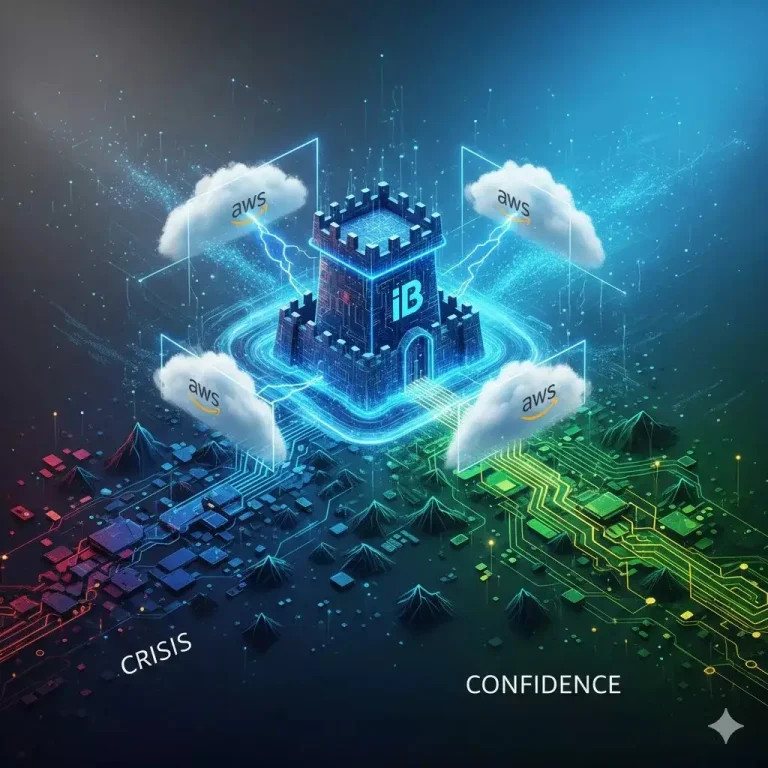
In the realm of enterprise cloud governance, AWS Landing Zones, AWS Organizations, and Service Control Policies (SCPs) form the backbone of secure, scalable multi-account strategies. As of December 2025, AWS Control Tower’s landing zone version 4.0 introduces flexible Controls-Only experiences and optional service integrations, while Landing Zone Accelerator (LZA) adds Universal Configuration for global compliance and regional implementations like C5-ready for Germany. AWS Organizations now supports full IAM policy language in SCPs, enabling conditions, resources, and NotAction for precise guardrails. These updates empower organizations to enforce digital sovereignty, automate VMware migrations via AWS Transform, and achieve predictable security outcomes.
This guide delivers over 50 interview questions with expert answers, tailored for roles like Cloud Architect, Security Engineer, or DevOps Lead. Real-world use cases from fintech, healthcare, and manufacturing highlight practical applications. At CloudSoftSol, we provide AWS governance consulting to deploy compliant multi-account environments. Let’s fortify your interview prep!
What are AWS Landing Zones, Organizations, and SCPs?
- AWS Landing Zones: Pre-configured multi-account environments using AWS Control Tower or LZA, aligning with best practices for security, governance, and compliance. They include OUs, centralized logging, and networking baselines.
- AWS Organizations: Service for managing multiple AWS accounts centrally, enabling consolidated billing, policy inheritance, and resource sharing.
- Service Control Policies (SCPs): Organization policies that set permission boundaries across accounts, denying unauthorized actions without granting permissions. In 2025, they support full IAM syntax for finer control.
Together, they enable secure scaling, as seen in LZA’s integration with over 35 AWS services for regulated workloads.
Top 50+ AWS Landing Zones, Organizations, and SCP Interview Questions and Answers
Questions are categorized for progressive difficulty, with 2025-specific insights and use cases.
Basic Questions (1-15)
1. What is an AWS Landing Zone?
Answer: An AWS Landing Zone is a pre-configured, secure multi-account AWS environment that implements best practices for governance, security, and compliance. It uses AWS Control Tower for managed setups or LZA for customizable IaC-based deployments. Real-World Use Case: A healthcare provider deploys a Landing Zone to segment patient data accounts from dev environments, ensuring HIPAA compliance from day one.
2. Differentiate between AWS Control Tower and Landing Zone Accelerator (LZA).
Answer: AWS Control Tower is a managed service for quick-setup landing zones with guardrails and dashboards. LZA is an open-source solution for IaC-driven customization, supporting 35+ services and compliance frameworks like BIO or ENS. Real-World Use Case: Use Control Tower for rapid onboarding in startups; LZA for enterprises needing Terraform exports in manufacturing migrations.
3. What is AWS Organizations?
Answer: AWS Organizations centralizes management of multiple AWS accounts, enabling features like consolidated billing, OUs, and policy application (e.g., SCPs, tag policies). It supports up to 10,000 accounts per organization. Real-World Use Case: A global bank uses Organizations to bill 500+ accounts centrally while applying uniform security baselines.
4. Explain Organizational Units (OUs) in AWS Organizations.
Answer: OUs are containers for grouping accounts logically (e.g., Prod, Dev), allowing inherited policies like SCPs for simplified governance. Real-World Use Case: Group dev/test accounts in one OU and production in another for differential SCP enforcement in fintech apps.
5. What are Service Control Policies (SCPs)?
Answer: SCPs are AWS Organizations policies that define maximum permissions for accounts/OUs by denying actions; they don’t grant access but act as guardrails evaluated before IAM policies. Real-World Use Case: Deny S3 public access via SCP in a media company’s OU to prevent data leaks.
6. How do SCPs differ from IAM policies?
Answer: SCPs set organization-wide boundaries (deny-only, inherited), while IAM policies grant specific permissions to users/roles. SCPs apply to all principals in affected accounts. Real-World Use Case: Use SCP to block EC2 launches in non-approved regions; IAM for fine-grained instance access.
7. What is the default FullAWSAccess SCP in AWS Organizations?
Answer: Automatically attached to the root OU, it allows all actions; don’t remove without a replacement allow policy, or accounts will fail. Real-World Use Case: Retain it during initial setup, then layer deny SCPs for maturing governance in growing orgs.
8. Describe the Shared Responsibility Model in Landing Zones.
Answer: AWS manages infrastructure security; customers handle data, access, and compliance via Landing Zone features like Guardrails and SCPs. Real-World Use Case: In a Landing Zone, AWS secures the control plane; customers configure SCPs for encryption enforcement.
9. What are Guardrails in AWS Control Tower?
Answer: Pre-configured controls (detective/preventive) for security/compliance, like enabling MFA or encrypting S3 buckets. Real-World Use Case: Enable preventive guardrails to auto-block non-compliant EC2 launches in prod OUs.
10. How do you enable AWS Organizations?
Answer: From the AWS Management Console, create an organization and invite/link existing accounts; enable features like consolidated billing. Real-World Use Case: A startup enables it to consolidate billing across dev and prod accounts for cost tracking.
11. What is the role of the Management Account in AWS Organizations?
Answer: The root account that creates the organization, delegates admin tasks, and isn’t affected by SCPs. Real-World Use Case: Use it solely for org-wide policy attachment in a central IT team’s setup.
12. Explain policy inheritance in AWS Organizations.
Answer: Deny statements inherit down the hierarchy (root > OU > account); allow statements require explicit attachment at each level. Real-World Use Case: Attach a deny SCP at root to block global services; override allows in child OUs.
13. What is the maximum size of an SCP?
Answer: 5120 characters; all elements (including whitespace) count toward the limit. Real-World Use Case: Minify JSON in large deny-list SCPs for regional restrictions.
14. How does LZA support compliance frameworks?
Answer: Via configurations like Universal for global standards or regional (e.g., C5 for Germany, BIO for Netherlands). Real-World Use Case: Deploy C5-ready LZA for EU sovereign cloud workloads in banking.
15. What is AWS SSO in Landing Zones?
Answer: Centralized identity federation for role assumption across accounts, integrated in Control Tower. Real-World Use Case: Enable SSO for cross-account access in a multi-team dev environment.
Intermediate Questions (16-30)
16. Describe AWS Control Tower landing zone version 4.0 (2025).
Answer: Introduces Controls-Only mode for custom integrations, optional service enablement, and dedicated resources; reduces drift and supports IPv6. Real-World Use Case: Disable unused integrations like AWS Config in cost-optimized setups.
17. How do you deploy a custom Landing Zone?
Answer: Use IaC tools like CDK/Terraform with LZA templates; start with Control Tower and customize via CfCT. Real-World Use Case: Export LZA to Terraform for version-controlled migrations in enterprises.
18. Explain deny-list vs. allow-list SCP strategies.
Answer: Deny-list (default FullAWSAccess + explicit denies) is flexible; allow-list (explicit allows + implicit deny) is restrictive but secure. Real-World Use Case: Use deny-list to block S3 deletes; allow-list for sandbox OUs.
19. How do SCPs evaluate with IAM?
Answer: SCPs first filter (deny overrides); then IAM grants; effective permission is intersection. Real-World Use Case: SCP denies public S3; IAM allows private access—users can’t make buckets public.
20. What are tag policies in AWS Organizations?
Answer: Enforce consistent tagging across resources for cost allocation and compliance. Real-World Use Case: Mandate “Environment:Prod” tag on all EC2 for automated billing reports.
21. How does AWS Transform integrate with LZA (2025)?
Answer: Automates VMware network config generation importable to LZA YAML for faster migrations. Real-World Use Case: Migrate on-prem networks to LZA-secured VPCs in hybrid setups.
22. Explain SCP conditions in 2025 updates.
Answer: Now support full IAM conditions (e.g., aws:RequestedRegion) for dynamic denies. Real-World Use Case: Deny actions outside business hours via time-based conditions.
23. What is Account Factory for Terraform (AFT)?
Answer: Automates secure account provisioning in Organizations using Terraform modules. Real-World Use Case: Provision compliant dev accounts on-demand for agile teams.
24. How do you test SCPs safely?
Answer: Attach to test OUs/accounts first; use IAM Access Analyzer for validation. Real-World Use Case: Sandbox SCPs in a non-prod OU before root attachment.
25. Describe regional Landing Zone implementations.
Answer: Tailored LZA configs for sovereignty, e.g., C5 for Germany (Q3 2025), ENS for Spain. Real-World Use Case: Deploy C5 LZA in AWS European Sovereign Cloud for GDPR-heavy workloads.
26. What is the Controls-Only experience in Control Tower 4.0?
Answer: Allows selective guardrail enforcement without full service integrations. Real-World Use Case: Enable only detective controls for minimal overhead in startups.
27. How do you handle SCP inheritance conflicts?
Answer: Denies propagate; ensures explicit allows at leaf levels for overrides. Real-World Use Case: Root deny on IAM changes; OU allow for admin roles.
28. What are backup policies in Organizations?
Answer: Centralized AWS Backup configs across accounts for compliance. Real-World Use Case: Enforce 7-year retention in healthcare OUs.
29. Explain LZA Universal Configuration (2025).
Answer: Sample baseline for global compliance, with workbook for audits. Real-World Use Case: Align with multiple frameworks for multinational corps.
30. How do you delegate admin tasks in Organizations?
Answer: Designate delegated admins for services like GuardDuty in member accounts. Real-World Use Case: Delegate Config management to security teams.
Advanced Questions (31-50+)
31. How do you implement zero-trust with SCPs and Landing Zones?
Answer: Use LZA for baseline networking; SCPs with conditions for least-privilege; integrate IAM Access Analyzer. Real-World Use Case: Deny cross-OU access except via approved VPC peering.
32. Describe SCP NotAction/NotResource (2025).
Answer: NotAction denies all except listed; NotResource excludes specific ARNs from denies. Real-World Use Case: Deny all EC2 actions except t3.micro instances.
33. What is drift reduction in Control Tower 2025?
Answer: Automated remediation for guardrail non-compliance. Real-World Use Case: Auto-fix unencrypted S3 buckets in prod.
34. How do you automate account enrollment?
Answer: Use Control Tower’s automatic enrollment for invited accounts. Real-World Use Case: Onboard M&A-acquired accounts seamlessly.
35. Explain SCP wildcards best practices.
Answer: Use sparingly to avoid over-permissioning; validate with Access Analyzer. Real-World Use Case: Deny s3:* except s3:GetObject for read-only access.
36. What are RCPs vs. SCPs (2025)?
Answer: Resource Control Policies (RCPs) control resource-level access; SCPs are account-wide. Real-World Use Case: RCP denies public S3 access per bucket.
37. How does LZA integrate with AWS Transform?
Answer: Generates importable YAML for VMware-to-AWS network migrations. Real-World Use Case: Automate hybrid cloud transitions in retail.
38. Describe IPv6 support in Landing Zones.
Answer: Control Tower 4.0 enables dual-stack VPCs for future-proofing. Real-World Use Case: Scale IoT fleets with IPv6 in manufacturing.
39. How do you use SCPs for regional restrictions?
Answer: Deny actions outside approved regions, exempting global services. Real-World Use Case: Restrict to EU regions for GDPR in LZA setups.
40. What is PrivateLink in Control Tower?
Answer: Enables private access to services like GuardDuty. Real-World Use Case: Secure data exfiltration prevention in finance.
41. Explain SCP policy editor (2025).
Answer: Console tool guiding action/resource/condition authoring. Real-World Use Case: Rapidly build deny policies for new threats.
42. How do you handle SCP testing in production?
Answer: Use separate test orgs; simulate with dry-run tools. Real-World Use Case: Phased rollout in OUs for zero disruption.
43. What are Nitro instance controls in 2025?
Answer: Updated guardrails for confidential computing in Control Tower. Real-World Use Case: Secure ML workloads with Nitro Enclaves.
44. Describe automatic OU creation in Organizations.
Answer: Use AFT or APIs for dynamic provisioning. Real-World Use Case: Auto-create project OUs in agile enterprises.
45. How do SCPs support digital sovereignty?
Answer: Regional LZA/SCP combos enforce data residency. Real-World Use Case: C5 SCPs in German sovereign cloud.
46. What is the LZA Compliance Workbook?
Answer: Tool for audit prep with Universal Configuration. Real-World Use Case: Pre-assess frameworks like PCI-DSS.
47. Explain SCP evaluation order.
Answer: Explicit deny > implicit deny > allow; SCPs before IAM. Real-World Use Case: Prioritize denies for high-risk actions.
48. How do you integrate SCPs with IAM Access Analyzer?
Answer: Validate SCPs against unused permissions. Real-World Use Case: Prune over-permissive SCPs quarterly.
49. What are optional integrations in Control Tower 4.0?
Answer: Toggle services like Config or Backup per landing zone. Real-World Use Case: Customize for low-cost dev zones.
50. Describe SCP for resource protection.
Answer: Deny deletes on shared resources like central IAM roles. Real-World Use Case: Protect org-wide logging roles.
51. How does LZA support VMware migrations (2025)?
Answer: AWS Transform auto-generates LZA configs from VMware discovery. Real-World Use Case: Accelerate lift-and-shift in legacy IT.
52. What is the impact of SCPs on root users?
Answer: SCPs affect root users in member accounts but not the management account. Real-World Use Case: Secure delegated roots in OUs.
Tips for Preparing for AWS Landing Zones/Organizations/SCP Interviews in 2025
- Hands-On Practice: Deploy a test org with Control Tower; experiment with LZA on GitHub.
- Certifications: AWS Certified Organization: Architect Professional emphasizes these topics.
- Scenarios: Focus on compliance (e.g., GDPR via SCPs) and migrations.
- Updates: Monitor re:Post for LZA 1.14.1 and SCP IAM parity.
At CloudSoftSol, our experts design governance blueprints. Contact us for workshops.
Conclusion
In 2025, AWS Landing Zones, Organizations, and SCPs enable sovereign, compliant scaling with innovations like Control Tower 4.0 and full IAM in SCPs. These questions prepare you for governance-focused roles—apply via labs. Explore more at www.cloudsoftsol.com.